top of page

Black Women & Health Care

A Space for Black Women to Feel Seen, Supported, and Understood in Their Health

​

Black women are often deeply attuned to their bodies — yet are more likely to be dismissed, undertreated, or unheard within healthcare settings.

​

Over time, this can contribute to exhaustion, mistrust, and disconnection from the body, while also increasing physiological stress, delaying care, and allowing health issues to progress without adequate support.

​

While these experiences are not exclusive to Black women, they occur more frequently — and with greater cumulative impact — in bodies navigating long-term stress, bias, and dismissal within health


This page exists to help close that gap, and to center health that honors autonomy, biology, and lived experience.

Honoring Autonomy

​
Honoring autonomy means recognizing that Black women know their bodies.
 
It means:
-Trusting lived signals instead of dismissing them as “normal,” “stress,” or “in your head”
-Supporting informed choice rather than compliance
-Creating space for decision-making without pressure, urgency, or fear
​
This work does not override medical care or replace personal choice.
It restores agency in a system where autonomy is often minimized.

Honoring Biology

​

Honoring biology means working with the body’s physiology, stress responses, and adaptive systems — not against them.

It means:
-Understanding how chronic stress, inflammation, blood sugar instability, and hormonal disruption accumulate over time
-Recognizing that genetics and epigenetics influence how the body responds to environment, nutrition, rest, and care
-Supporting regulation and repair at the cellular and systems level, not just managing symptoms
​
This approach respects that biology is dynamic — and that the body responds to daily inputs long before disease is named.

Honoring Lived Experience

​
Honoring lived experience means acknowledging that health does not exist in a vacuum.
It means recognizing:
​
-The cumulative impact of stress, bias, and being unheard
-The emotional and physical cost of navigating care while advocating for oneself
-That healing is shaped by environment, history, and daily realities — not just lab results

This work creates space for the full context of a person’s life to matter in their health journey.

​


(Acknowledgment, not labels)

Common Health Patterns Seen in Black Women
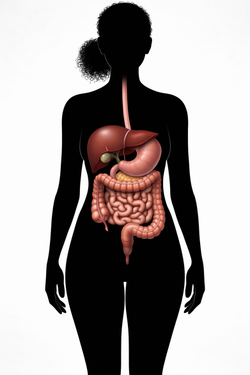
Digestive issues

Bloating, constipation, reflux, sluggish digestion, and IBS-like symptoms are common and often connected to stress, low fiber intake, impaired gut motility, and nervous system dysregulation.

Fibroids

Black women experience fibroids more frequently and at younger ages. Fibroids are strongly influenced by estrogen metabolism, liver detox pathways, inflammation, and insulin signaling—not genetics alone.

PCOS & Hormonal imbalance

PCOS often overlaps with insulin resistance, irregular cycles, fatigue, acne, excess androgens, and weight changes—rooted in blood sugar regulation and hypothalamic signaling.

Obesity & weight resistance

This is rarely about willpower. Chronic cortisol exposure, disrupted sleep, inflammation, metabolic adaptation, and insulin resistance all shape how the body stores and protects energy.

Diabetes & prediabetes

Black women are disproportionately affected by insulin resistance, often developing blood sugar dysregulation years before diagnosis—sometimes without obvious symptoms.

Pregnancy & postpartum health

Black women face higher rates of gestational diabetes, preeclampsia, preterm birth, postpartum complications, and maternal mortality. These outcomes are deeply influenced by metabolic health, inflammation, stress load, nutrient status, and nervous system regulation—before, during, and after pregnancy.

Mental & emotional health

Chronic stress, anxiety, depression, burnout, and emotional fatigue are biological responses—not personal weaknesses. The nervous system carries cumulative stress from survival, caregiving, and constant output.

Black women are often told these experiences are “just genetic,” “normal,” or something we must simply manage.

What’s often missing is why these patterns appear so consistently—and how deeply they are influenced by long-term biological stress, lifestyle inputs, and recovery gaps.

Many of these conditions share common roots:
blood sugar instability, chronic inflammation, digestive strain, toxin accumulation, liver insufficiencies, hormonal disruption, nervous system overload, and insufficient restoration.                

                                       
                                           These experiences are not random.
They develop when the body remains under long-term biological stress without enough restoration.

 
This page — and my work — focuses on:

-Supporting digestion and elimination
-Stabilizing blood sugar
-Reducing inflammatory burden
-Regulating the nervous system
-Rebuilding foundational daily habits that allow the body to adapt and heal

                                                            Not quick fixes.
                                                         Not blame or shame.
                                      Education. Support. Practical daily change.

bottom of page